Hẹp hạ thanh môn mắc phải ở trẻ nhũ nhi 2 tháng tuổi sau khi đặt nội khí quản kéo dài liên quan đến viêm phổi do ho gà: Một báo cáo ca bệnh
Acquired Subglottic Stenosis in a 2-Month-Old Infant After Prolonged Intubation Associated With Pertussis Pneumonia: A Case Report
Abstract
Tóm tắt
BACKGROUND: Subglottic stenosis (SGS) is a life-threatening airway narrowing often acquired after prolonged intubation in infants. Although severe cases have historically required open surgery, emerging endoscopic techniques such as laser therapy, balloon dilation, and cryotherapy provide less invasive alternatives with promising outcomes. This case report describes a 2-month-old female infant who developed subglottic stenosis after intubation and mechanical ventilation for acute respiratory failure due to pertussis pneumonia.
BỐI CẢNH: Hẹp hạ thanh môn (SGS) là tình trạng hẹp đường thở đe dọa tính mạng, thường xảy ra sau khi đặt nội khí quản kéo dài ở trẻ sơ sinh và trẻ nhỏ. Mặc dù các trường hợp nghiêm trọng trước đây thường đòi hỏi phải phẫu thuật mở, các kỹ thuật nội soi mới nổi như liệu pháp laser, nong bóng và liệu pháp áp lạnh mang lại những giải pháp thay thế ít xâm lấn hơn với kết quả đầy triển vọng. Báo cáo ca bệnh này mô tả một bé gái 2 tháng tuổi bị hẹp hạ thanh môn sau khi đặt nội khí quản và thở máy do suy hô hấp cấp vì viêm phổi do ho gà.
CASE REPORT: A 2-month-old female infant with a history of pertussis pneumonia requiring 10 days of intubation presented with respiratory distress and stridor. Diagnostic imaging and flexible laryngoscopy confirmed grade 3 SGS (Cotton-Myer classification). She underwent a multimodal endoscopic approach, including holmium laser ablation (0.5-1.0 J/pulse) for fibrotic tissue removal, balloon dilation (6 mm, 14 atmospheres) to expand the stenotic segment, and cryotherapy (-70°C) to minimize scar formation. Immediate post-procedural improvement was observed, and oxygen was gradually tapered by day 5. Follow-up fiber laryngoscopy at 1 month demonstrated sustained airway patency without restenosis.
BÁO CÁO CA BỆNH: Một bé gái 2 tháng tuổi có tiền sử viêm phổi do ho gà phải đặt nội khí quản trong 10 ngày, nhập viện với tình trạng suy hô hấp và thở rít. Chẩn đoán hình ảnh và nội soi thanh quản ống mềm xác định hẹp hạ thanh môn độ 3 (theo phân loại Cotton-Myer). Bệnh nhi đã được can thiệp bằng phương pháp nội soi đa phương thức, bao gồm đốt laser holmium (0,5-1,0 J/xung) để loại bỏ mô xơ, nong bóng (6 mm, 14 atmospheres) để mở rộng đoạn hẹp, và liệu pháp áp lạnh (-70°C) nhằm giảm thiểu hình thành sẹo. Tình trạng cải thiện được ghi nhận ngay sau thủ thuật, và lượng oxy hỗ trợ được giảm dần rồi cai hẳn vào ngày thứ 5. Nội soi thanh quản ống mềm kiểm tra tại thời điểm 1 tháng cho thấy đường thở duy trì độ thông thoáng tốt và không bị tái hẹp.
CONCLUSIONS: This case supports the efficacy of combined endoscopic modalities for severe pediatric SGS, offering advantages over open surgery, including reduced morbidity and faster recovery. Long-term studies are needed to confirm durability, particularly for high-grade stenosis. Standardized protocols for laser settings, balloon sizing, and cryotherapy duration should be established to optimize outcomes.
KẾT LUẬN: Ca bệnh này ủng hộ hiệu quả của việc kết hợp các phương pháp nội soi đối với tình trạng hẹp hạ thanh môn nghiêm trọng ở trẻ em, mang lại nhiều ưu điểm so với phẫu thuật mở, bao gồm giảm tỷ lệ biến chứng và phục hồi nhanh hơn. Cần có các nghiên cứu dài hạn để xác nhận tính bền vững của phương pháp, đặc biệt là đối với các trường hợp hẹp mức độ nặng. Đồng thời, cần xây dựng các phác đồ chuẩn hóa cho các thông số cài đặt laser, kích thước bóng nong và thời gian áp lạnh để tối ưu hóa kết quả điều trị.
Keywords: subglottic stenosis, infant, Intubation, intratracheal
Từ khóa: hẹp hạ thanh môn, trẻ nhỏ, đặt nội khí quản, trong khí quản
Introduction
Đặt vấn đề
Pertussis (whooping cough) remains a major global public health challenge caused by the human pathogen Bordetella pertussis. The World Health Organization reports approximately 50 million cases and 300 000 deaths annually, primarily among infants 1. In the United States, widespread vaccination led to a dramatic decline in cases from approximately 150 000 to 250 000 annually in the pre-vaccine era to a historic low of 1010 cases in 1976. However, a resurgence has been observed in recent decades, largely attributed to waning immunity and gaps in vaccination coverage 2.
Ho gà (pertussis) vẫn là một thách thức lớn đối với sức khỏe cộng đồng trên toàn cầu do tác nhân gây bệnh ở người là vi khuẩn Bordetella pertussis gây ra. Tổ chức Y tế Thế giới báo cáo có khoảng 50 triệu ca mắc và 300 000 ca tử vong hàng năm, chủ yếu là ở trẻ nhỏ 1. Tại Hoa Kỳ, việc tiêm chủng rộng rãi đã dẫn đến sự sụt giảm đáng kể số ca mắc từ khoảng 150 000 đến 250 000 ca hàng năm trong kỷ nguyên trước khi có vắc-xin xuống mức thấp kỷ lục là 1010 ca vào năm 1976. Tuy nhiên, sự gia tăng trở lại đã được ghi nhận trong những thập kỷ gần đây, phần lớn là do khả năng miễn dịch bị suy giảm theo thời gian và những lỗ hổng trong việc bao phủ tiêm chủng 2.
B. pertussis is a gram-negative coccobacillus that adheres to ciliated respiratory epithelial cells. Transmission occurs through respiratory droplets, and the pathogen is highly contagious, with attack rates reaching 80% to 100% among susceptible household contacts 2. Infants too young to undergo vaccination have the highest risks of severe complications and mortality; they often develop pulmonary hypertension that exacerbates systemic hypotension and profound hypoxia 2,3. Serious complications among infants hospitalized with severe pertussis commonly require respiratory support in critical cases.
B. pertussis là một trực khuẩn delta (coccobacillus) gram âm bám dính vào các tế bào biểu mô hô hấp có lông chuyển. Sự lây truyền xảy ra thông qua các giọt bắn đường hô hấp, và tác nhân gây bệnh này có tính truyền nhiễm cao, với tỷ lệ tấn công lên tới 80% đến 100% trong số những người tiếp xúc trong cùng hộ gia đình có khả năng nhiễm bệnh 2. Trẻ nhỏ chưa đến tuổi tiêm chủng có nguy cơ bị biến chứng nặng và tử vong cao nhất; trẻ thường bị tăng áp lực động mạch phổi làm trầm trọng thêm tình trạng hạ huyết áp toàn thân và thiếu oxy nghiêm trọng 2,3. Các biến chứng nghiêm trọng ở trẻ nhũ nhi nhập viện vì ho gà nặng thường đòi hỏi phải hỗ trợ hô hấp trong các trường hợp nguy kịch.
The primary etiologies of acquired subglottic stenosis (SGS) in pediatric patients include intubation lasting longer than 7 to 10 days, inappropriate tube size, patient agitation leading to tube microtrauma, localized infection, and comorbidities such as gastroesophageal reflux disease or genetic syndromes such as Down syndrome 4–8. Although the overall risk of SGS after neonatal intubation is approximately 1%, prolonged mechanical ventilation substantially increases this risk 9. Severe cases may result in respiratory distress, recurrent croup, or complete airway obstruction warranting tracheotomy 10.
Các nguyên nhân chính gây hẹp hạ thanh môn (SGS) mắc phải ở bệnh nhi bao gồm thời gian đặt nội khí quản kéo dài hơn 7 đến 10 ngày, kích thước ống nội khí quản không phù hợp, sự kích thích của bệnh nhân dẫn đến vi chấn thương do ống gây ra, nhiễm trùng khu trú, và các bệnh đồng mắc như bệnh trào ngược dạ dày thực quản hoặc các hội chứng di truyền như hội chứng Down 4–8. Mặc dù nguy cơ tổng thể bị SGS sau khi đặt nội khí quản ở trẻ sơ sinh là khoảng 1%, việc thông khí cơ học kéo dài làm tăng đáng kể nguy cơ này 9. Những trường hợp nghiêm trọng có thể dẫn đến suy hô hấp, viêm thanh khí phế quản (croup) tái phát, hoặc tắc nghẽn đường thở hoàn toàn cần phải mở khí quản 10.
Management of SGS is guided by the Cotton-Myer grading system. Grades I and II stenosis can often be treated endoscopically using techniques such as balloon dilation, laser excision, or steroid injection. More severe Grades III and IV cases may require open surgical procedures, including laryngotracheal reconstruction or cricotracheal resection 11. Recent advances favor multimodal endoscopic approaches incorporating holmium laser for precise ablation, balloon dilation for controlled expansion, and adjuvant cryotherapy to minimize scar recurrence 8,12,13. Jiao et al reported treatment of 15 pediatric patients with SGS (ages 3 months to 3 years) using holmium laser and cryotherapy via flexible bronchoscopy; they achieved a 100% success rate without restenosis at the 6-month follow-up 13. This case report describes a 2-month-old female infant who developed severe SGS (Grade 3) after intubation and mechanical ventilation for acute respiratory failure secondary to pertussis pneumonia; successful treatment was achieved via combined endoscopic modalities.
Việc xử trí SGS được hướng dẫn bởi hệ thống phân loại Cotton-Myer. Hẹp độ I và độ II thường có thể được điều trị bằng nội soi bằng các kỹ thuật như nong bóng, cắt bỏ bằng laser, hoặc tiêm steroid. Các trường hợp độ III và độ IV nghiêm trọng hơn có thể đòi hỏi các quy trình phẫu thuật mở, bao gồm tái tạo thanh khí quản hoặc cắt đoạn sụn nhẫn khí quản 11. Những tiến bộ gần đây có xu hướng ưu tiên các phương pháp tiếp cận nội soi đa phương thức kết hợp laser holmium để đốt chính xác, nong bóng để mở rộng có kiểm soát, và liệu pháp áp lạnh bổ trợ để giảm thiểu sự tái phát của sẹo 8,12,13. Jiao và các đồng nghiệp đã báo cáo việc điều trị cho 15 bệnh nhi bị SGS (từ 3 tháng đến 3 tuổi) bằng cách sử dụng laser holmium và liệu pháp áp lạnh thông qua nội soi phế quản ống mềm; họ đã đạt được tỷ lệ thành công 100% mà không bị tái hẹp tại thời điểm theo dõi 6 tháng 13. Báo cáo ca bệnh này mô tả một bé gái 2 tháng tuổi bị SGS nghiêm trọng (Độ 3) sau khi đặt nội khí quản và thở máy do suy hô hấp cấp thứ phát sau viêm phổi do ho gà; điều trị thành công đã đạt được thông qua các phương pháp nội soi kết hợp.
Case Report
Báo cáo ca bệnh
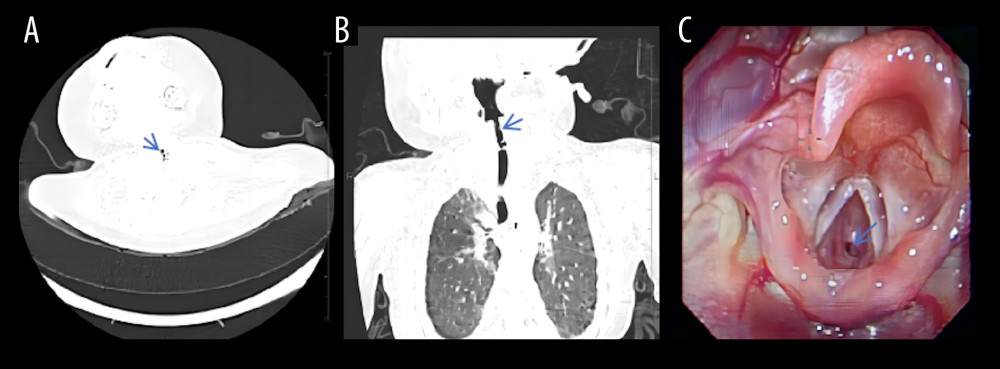
A 2-month-old girl was admitted to the intensive care unit of our hospital in September 2022 with a 6-day history of shortness of breath and cough, accompanied by hoarseness for 2 days. Approximately 1 month earlier, she had been hospitalized locally for pertussis, requiring intubation and mechanical ventilation for 10 days; she also received erythromycin injections for 2 weeks. She was the third child of unrelated healthy parents, born vaginally at 37+1 weeks of gestation without any medical complications at birth. Upon admission to the intensive care unit, her vital signs were as follows: body temperature, 36.9°C; heart rate, 204 beats/min; respiratory rate, 47 breaths/min; and blood pressure, 99/72 mmHg. Physical examination revealed no accessory breathing sounds and normal heart sounds on auscultation. Chest wall retraction was observed, but there was no hepatosplenomegaly. The patient developed hypoxemia and respiratory distress; therefore, oxygen therapy (2 L/min via nasal cannula) was administered. However, her symptoms did not considerably improve. To further clarify the etiology, a neck and chest computed tomography (CT) scan was performed. CT imaging revealed localized SGS, and the narrowest portion measured approximately 1.6 mm in width. A linear soft tissue structure was observed above the narrowest segment within the lumen (Figure 1A, 1B). Subsequent fiber laryngoscopy demonstrated severe SGS, characterized by a minute pinhole opening (Figure 1C). The patient was diagnosed with severe acquired SGS (Grade 3), likely secondary to prolonged intubation during her prior hospitalization for pertussis.
Một bé gái 2 tháng tuổi được nhập viện vào khoa hồi sức tích cực của bệnh viện chúng tôi vào tháng 9 năm 2022 với tiền sử khó thở và ho trong 6 ngày, kèm theo khàn tiếng trong 2 ngày. Khoảng 1 tháng trước đó, bệnh nhi đã nhập viện tại địa phương vì bệnh ho gà, cần đặt nội khí quản và thở máy trong 10 ngày; trẻ cũng đã được tiêm erythromycin trong 2 tuần. Đây là người con thứ ba của cặp vợ chồng khỏe mạnh không có quan hệ huyết thống, trẻ sinh thường ở tuần thai 37+1 mà không gặp biến chứng y khoa nào lúc chào đời. Khi nhập khoa hồi sức tích cực, các dấu hiệu sinh tồn của trẻ như sau: thân nhiệt 36,9°C; nhịp tim 204 nhịp/phút; nhịp thở 47 nhịp/phút; và huyết áp 99/72 mmHg. Khám thực thể không phát hiện tiếng thở phụ và âm tim bình thường khi nghe. Quan sát thấy có tình trạng rút lõm lồng ngực, nhưng không có gan lách to. Bệnh nhi xuất hiện tình trạng thiếu oxy và suy hô hấp; do đó, liệu pháp oxy (2 L/phút qua ống thông mũi) đã được thực hiện. Tuy nhiên, các triệu chứng của trẻ không cải thiện đáng kể. Để làm rõ hơn nguyên nhân, bệnh nhi đã được chụp cắt lớp vi tính (CT) cổ và ngực. Hình ảnh CT cho thấy tình trạng hẹp hạ thanh môn (SGS) khu trú, và đoạn hẹp nhất đo được rộng khoảng 1,6 mm. Một cấu trúc mô mềm dạng dải được quan sát thấy phía trên đoạn hẹp nhất trong lòng đường thở (Hình 1A, 1B). Nội soi thanh quản ống mềm sau đó cho thấy tình trạng SGS nghiêm trọng, đặc trưng bởi một lỗ mở nhỏ như đầu kim (Hình 1C). Bệnh nhi được chẩn đoán mắc SGS mắc phải nghiêm trọng (Độ 3), có khả năng là hệ quả thứ phát sau khi đặt nội khí quản kéo dài trong lần nhập viện trước vì ho gà.
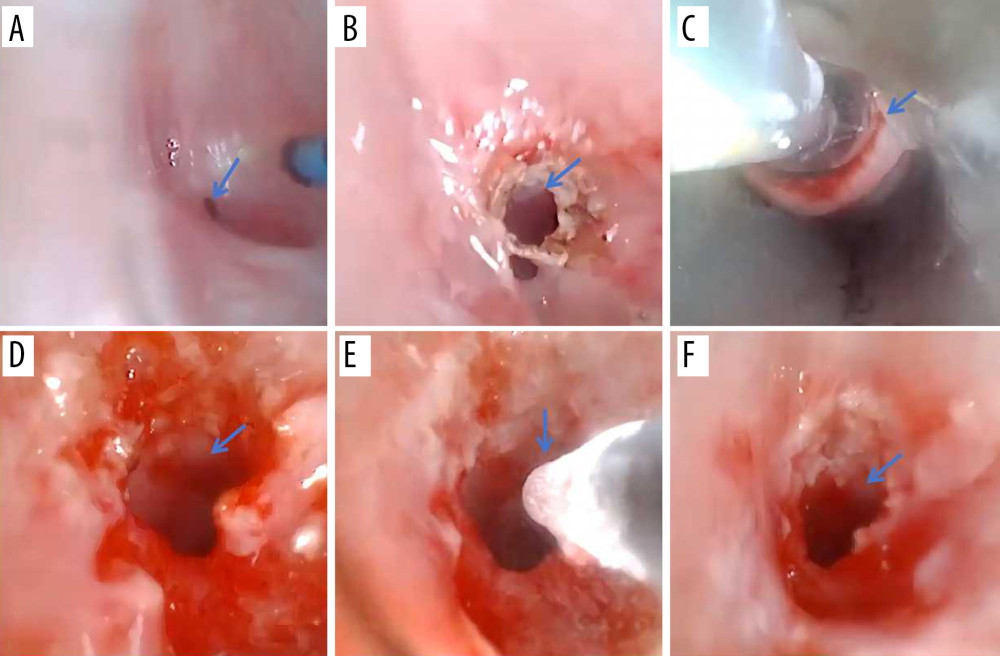
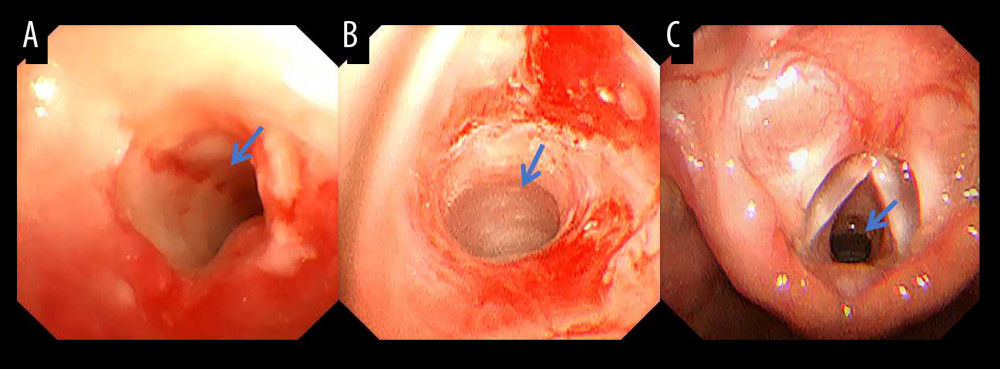
On hospital day 2, after departmental discussion, a multidisciplinary team (i.e., otolaryngologists, pulmonologists, and anesthesiologists) decided to perform balloon dilation airway plasty combined with holmium laser therapy and cryotherapy under general anesthesia. The patient received an initial loading dose of dexamethasone (1 μg/kg), followed by a maintenance infusion of 0.3 μg/kg/h. General anesthesia was maintained with 3% sevoflurane inhalation, remifentanil (0.2 μg/kg/min), intravenous methylprednisolone (30 mg), atropine (0.25 mg), and lidocaine (25 mg). After deep sedation and spontaneous respiration had been achieved, an additional 10 mg of etomidate were administered to deepen anesthesia. Laryngoscopy was then performed to expose the supraglottic and glottic larynx; this was followed by the insertion of a 4.9-mm outer diameter flexible bronchoscope (Olympus 260; Olympus Corp) into the subglottic region (Figure 2A) in accordance with our hospital’s protocol 14. The holmium laser (0.5–1.0 J/pulse) was used to excise granulation and scar tissue precisely over multiple sessions, resulting in substantial enlargement of the subglottic lumen (Figure 2B). A 6.0-mm balloon was subsequently inflated to 14 atmospheres for 15 s and repeated twice (Figure 2C, 2D). Carbon dioxide cryotherapy was then applied to the treated area to reduce thermal injury, scar formation, and restenosis (Figure 2E). Cryotherapy (−70°C) was administered for 30 to 40 s at multiple sites and repeated twice. Postoperatively, the airway lumen showed considerable enlargement (Figure 2F), and the patient demonstrated clinically significant improvement in respiratory symptoms, including stridor, retractions, and dyspnea. Follow-up bronchoscopy with repeat balloon dilation and cryotherapy was performed on hospital day 4, revealing further improvement in subglottic patency and a clear airway (Figure 3A). The nasal tube was removed on hospital day 5, and the patient was discharged on hospital day 11. Weekly outpatient balloon dilation and cryotherapy sessions were conducted for 2 weeks (Figure 3B). One month after discharge, laryngoscopy showed no residual stenosis (Figure 3C), and the patient remained asymptomatic. Telephone follow-ups were conducted at approximately 6 and 12 months after discharge. The child remained free of respiratory symptoms and demonstrated normal growth and development. Due to the absence of clinical manifestations, the parents declined further imaging and endoscopic airway evaluations. All procedures were performed with parental consent.
Vào ngày thứ 2 nằm viện, sau khi thảo luận tại khoa, một đội ngũ đa chuyên khoa (bao gồm bác sĩ tai mũi họng, bác sĩ hô hấp và bác sĩ gây mê) đã quyết định thực hiện tạo hình đường thở bằng nong bóng kết hợp với liệu pháp laser holmium và liệu pháp áp lạnh dưới gây mê toàn thân. Bệnh nhi được tiêm liều nạp dexamethasone đầu tiên (1 μg/kg), sau đó là truyền duy trì với liều 0,3 μg/kg/giờ. Gây mê toàn thân được duy trì bằng hít sevoflurane 3%, remifentanil (0,2 μg/kg/phút), methylprednisolone tiêm tĩnh mạch (30 mg), atropine (0,25 mg) và lidocaine (25 mg). Sau khi đạt được độ mê sâu và tự thở, thêm 10 mg etomidate đã được tiêm để tăng độ mê. Thủ thuật nội soi thanh quản được thực hiện để bộc lộ vùng thanh quản trên thanh môn và thanh môn; sau đó một ống soi phế quản ống mềm đường kính ngoài 4,9 mm (Olympus 260; Olympus Corp) được đưa vào vùng hạ thanh môn (Hình 2A) theo phác đồ của bệnh viện chúng tôi 14. Laser holmium (0,5–1,0 J/xung) được sử dụng để cắt bỏ chính xác mô hạt và mô sẹo qua nhiều phiên, dẫn đến sự mở rộng đáng kể lòng hạ thanh môn (Hình 2B). Một bóng nong 6,0 mm sau đó được bơm căng đến 14 atmospheres trong 15 giây và lặp lại hai lần (Hình 2C, 2D). Liệu pháp áp lạnh bằng carbon dioxide sau đó được áp dụng vào vùng điều trị để giảm tổn thương nhiệt, hình thành sẹo và tái hẹp (Hình 2E). Liệu pháp áp lạnh (−70°C) được thực hiện trong 30 đến 40 giây tại nhiều vị trí và lặp lại hai lần. Sau phẫu thuật, lòng đường thở cho thấy sự mở rộng đáng kể (Hình 2F), và bệnh nhi cho thấy sự cải thiện đáng kể về mặt lâm sàng đối với các triệu chứng hô hấp, bao gồm thở rít, rút lõm và khó thở. Nội soi phế quản kiểm tra lại với việc nong bóng và áp lạnh được thực hiện vào ngày thứ 4 nằm viện, cho thấy sự cải thiện thêm về độ thông thoáng hạ thanh môn và đường thở thông thoáng (Hình 3A). Ống nội khí quản được rút vào ngày thứ 5 và bệnh nhi xuất viện vào ngày thứ 11. Các phiên nong bóng và áp lạnh ngoại trú hàng tuần được thực hiện trong 2 tuần (Hình 3B). Một tháng sau khi xuất viện, nội soi thanh quản cho thấy không còn tình trạng hẹp còn sót lại (Hình 3C), và bệnh nhi vẫn không có triệu chứng. Việc theo dõi qua điện thoại được thực hiện vào khoảng 6 và 12 tháng sau khi xuất viện. Trẻ vẫn không có triệu chứng hô hấp và cho thấy sự tăng trưởng và phát triển bình thường. Do không còn biểu hiện lâm sàng, cha mẹ bệnh nhi đã từ chối thực hiện thêm các đánh giá hình ảnh và nội soi đường thở. Tất cả các quy trình đã được thực hiện với sự đồng ý của cha mẹ.
Discussion
Bàn luận
SGS remains a complex challenge in pediatric airway management, particularly in cases of acquired stenosis due to prolonged intubation 5,15. This case report demonstrates the successful treatment of severe Grade 3 SGS in a 2-month-old infant through multimodal endoscopic therapy involving holmium laser, balloon dilation, and cryotherapy; durable resolution was achieved. This approach may offer advantages over conventional open surgery by reducing morbidity and expediting recovery. Careful selection of parameters such as laser energy, balloon size, and cryotherapy duration is essential to ensure procedural safety 5,13.
Hẹp hạ thanh môn (SGS) vẫn là một thách thức phức tạp trong quản lý đường thở nhi khoa, đặc biệt là trong các trường hợp hẹp mắc phải do đặt nội khí quản kéo dài 5,15. Báo cáo ca bệnh này minh họa việc điều trị thành công SGS độ 3 nghiêm trọng ở một trẻ sơ sinh 2 tháng tuổi thông qua liệu pháp nội soi đa phương thức bao gồm laser holmium, nong bóng và liệu pháp áp lạnh; kết quả đạt được là sự ổn định bền vững. Phương pháp này có thể mang lại những ưu điểm so với phẫu thuật mở thông thường bằng cách giảm tỷ lệ biến chứng và đẩy nhanh quá trình hồi phục. Việc lựa chọn cẩn thận các thông số như năng lượng laser, kích thước bóng và thời gian áp lạnh là yếu tố then chốt để đảm bảo an toàn cho thủ thuật 5,13.
The patient’s presentation of stridor and respiratory distress after prolonged intubation for pertussis pneumonia closely aligns with the typical features of SGS described in previous reports 10,16. Similar to the cohort study by Rodriguez et al 16, our patient developed stenosis after 10 days of intubation, consistent with evidence indicating an 8-fold increase in SGS risk when intubation exceeds 7 days 9. Diagnostic confirmation via CT and laryngoscopy was consistent with current standards 17, whereas the use of precise CT measurements (1.6 mm) enabled more accurate quantification compared with conventional Cotton-Myer grading alone 11.
Biểu hiện thở rít và suy hô hấp của bệnh nhân sau khi đặt nội khí quản kéo dài do viêm phổi ho gà tương đồng chặt chẽ với các đặc điểm điển hình của SGS được mô tả trong các báo cáo trước đây 10,16. Tương tự như nghiên cứu đoàn hệ của Rodriguez và cộng sự 16, bệnh nhân của chúng tôi phát triển tình trạng hẹp sau 10 ngày đặt nội khí quản, phù hợp với bằng chứng cho thấy nguy cơ bị SGS tăng gấp 8 lần khi thời gian đặt nội khí quản vượt quá 7 ngày 9. Việc xác nhận chẩn đoán qua chụp CT và nội soi thanh quản phù hợp với các tiêu chuẩn hiện hành 17, trong khi đó việc sử dụng các phép đo CT chính xác (1,6 mm) đã cho phép định lượng chính xác hơn so với chỉ sử dụng phân loại Cotton-Myer thông thường 11.
Our management strategy differed from conventional approaches in 3 key aspects. First, sequential holmium laser ablation (0.5–1.0 J/pulse) was utilized instead of CO2 laser, allowing flexible bronchoscopy delivery – a technique that enhances precision in pediatric airways 18,19. Second, balloon dilation (6 mm, 14 atmospheres) was performed after laser ablation, rather than older bougienage techniques; this combined method achieves immediate patency rates of 85%, compared with 60% for single-modality interventions in similar reports 20,21. Third, adjuvant cryotherapy (−70°C) was incorporated to reduce restenosis, with reported rates of 0% at 1 month vs 15% to 20% for laser-only treatments 13,22. These refinements likely contributed to the patient’s rapid recovery (extubation within 5 days), which contrasted with the typical 10- to 14-day recovery period observed in open surgical series 5,12.
Chiến lược quản lý của chúng tôi khác biệt so với các phương pháp tiếp cận thông thường ở 3 khía cạnh chính. Thứ nhất, phương pháp cắt bỏ bằng laser holmium tuần tự (0,5–1,0 J/xung) đã được sử dụng thay vì laser CO2, cho phép thực hiện qua nội soi phế quản ống mềm – một kỹ thuật giúp tăng cường độ chính xác trong đường thở nhi khoa 18,19. Thứ hai, nong bóng (6 mm, 14 atmospheres) được thực hiện sau khi cắt bỏ bằng laser, thay vì các kỹ thuật nong bằng ống (bougienage) cũ hơn; phương pháp kết hợp này đạt tỷ lệ thông thoáng ngay lập tức là 85%, so với 60% đối với các can thiệp đơn phương thức trong các báo cáo tương tự 20,21. Thứ ba, liệu pháp áp lạnh bổ trợ (−70°C) được kết hợp để giảm tái hẹp, với tỷ lệ được báo cáo là 0% tại thời điểm 1 tháng so với 15% đến 20% đối với các phương pháp điều trị chỉ dùng laser 13,22. Những cải tiến này có khả năng góp phần vào sự phục hồi nhanh chóng của bệnh nhân (rút nội khí quản trong vòng 5 ngày), trái ngược với thời gian phục hồi điển hình từ 10 đến 14 ngày được quan sát thấy trong các loạt phẫu thuật mở 5,12.
The clinical course in this case largely paralleled the outcomes reported by Jiao et al 13 using similar techniques, although their longer follow-up period (>6 months) provides stronger evidence of long-term durability. Our case extends these findings by demonstrating efficacy in a younger infant (2 months vs median 7 months) with more severe stenosis (Grade 3 vs Grade 2). However, as emphasized by Quesnel et al 21, successful management requires the collaboration of multidisciplinary teams and precise parameter selection, particularly in balloon sizing (approximately 1 mm larger than the age-appropriate endotracheal tube) to minimize the risk of tracheal injury 23.
Quá trình lâm sàng trong trường hợp này phần lớn song hành với kết quả được báo cáo bởi Jiao và cộng sự 13 khi sử dụng các kỹ thuật tương tự, mặc dù thời gian theo dõi dài hơn của họ (>6 tháng) cung cấp bằng chứng vững chắc hơn về tính bền vững lâu dài. Ca bệnh của chúng tôi mở rộng các phát hiện này bằng cách chứng minh tính hiệu quả ở một trẻ nhỏ hơn (2 tháng tuổi so với độ tuổi trung bình 7 tháng) với mức độ hẹp nặng hơn (Độ 3 so với Độ 2). Tuy nhiên, như Quesnel và cộng sự 21 đã nhấn mạnh, việc quản lý thành công đòi hỏi sự cộng tác của các đội ngũ đa chuyên khoa và việc lựa chọn thông số chính xác, đặc biệt là trong việc xác định kích thước bóng (lớn hơn khoảng 1 mm so với ống nội khí quản phù hợp với độ tuổi) để giảm thiểu nguy cơ tổn thương khí quản 23.
Although the present report is limited by its short follow-up duration, absence of objective metrics for outcome evaluation, and inherent single-case bias, future research should aim to conduct randomized controlled trials comparing multimodal endoscopic therapy with single-modality interventions or open surgical approaches. Moreover, the establishment of standardized protocols for balloon sizing, laser parameters, and cryotherapy duration will be essential to enhance reproducibility and optimize treatment outcomes.
Mặc dù báo cáo hiện tại bị giới hạn bởi thời gian theo dõi ngắn, thiếu các số liệu khách quan để đánh giá kết quả và sai số tiềm ẩn từ một ca bệnh đơn lẻ, các nghiên cứu trong tương lai nên hướng tới việc thực hiện các thử nghiệm lâm sàng ngẫu nhiên có đối chứng so sánh liệu pháp nội soi đa phương thức với các can thiệp đơn phương thức hoặc các phương pháp phẫu thuật mở. Hơn nữa, việc thiết lập các phác đồ chuẩn hóa cho kích thước bóng, thông số laser và thời gian áp lạnh sẽ là yếu tố thiết yếu để nâng cao khả năng tái lập và tối ưu hóa kết quả điều trị.
Conclusions
Kết luận
This case demonstrates that a combination of endoscopic modalities – holmium laser, balloon dilation, and cryotherapy – can effectively manage severe acquired SGS in infants, providing a less invasive alternative to conventional open surgery with faster recovery. This multimodal approach may be considered a primary treatment option for Grade 3 SGS, although validation through larger studies with extended follow-up is warranted to confirm long-term efficacy. Standardization of procedural parameters across institutions will be critical for ensuring consistent and reproducible results.
Ca bệnh này chứng minh rằng việc kết hợp các phương pháp nội soi – bao gồm laser holmium, nong bóng và liệu pháp áp lạnh – có thể quản lý hiệu quả tình trạng hẹp hạ thanh môn (SGS) mắc phải nghiêm trọng ở trẻ nhũ nhi, cung cấp một giải pháp thay thế ít xâm lấn hơn so với phẫu thuật mở truyền thống với thời gian hồi phục nhanh hơn. Phương pháp đa phương thức này có thể được xem xét là lựa chọn điều trị ưu tiên cho SGS độ 3, mặc dù cần có sự xác nhận thông qua các nghiên cứu lớn hơn với thời gian theo dõi kéo dài để khẳng định tính hiệu quả lâu dài. Việc chuẩn hóa các thông số thủ thuật giữa các cơ sở y tế sẽ là yếu tố then chốt để đảm bảo kết quả nhất quán và có thể tái lập.
Reference
- World Health Organization: Laboratory manual for the diagnosis of whooping cough caused by Bordetella pertussis-Bordetella parapertussis. Update 2014 [Internet], 2014, Geneva, WHO [cited 2020 Jan 7]. Available from: https://www.who.int/publications/i/item/laboratory-manual-for-the-diagnosis-of-whooping-cough-caused-by-bordetella-pertussis-bordetella-parapertussis.-update-2014
- Lauria AM, Zabbo CP, Pertussis: StatPearls [Internet], 2025, Treasure Island (FL), StatPearls Publishing [cited 2025 Sep 10]. Available from:http://www.ncbi.nlm.nih.gov/books/NBK519008/
- Aldas S, Ersoy M, Ozmen BO, A pediatric health problem increasing with migration: pertussis reloading: Int J Infect Dis, 2025; 160; 108040
- Cakir E, Atabek AA, Calim OF, Post-intubation subglottic stenosis in children: Analysis of clinical features and risk factors: Pediatr Int, 2020; 62(3); 386-89
- Oh SK, Park KN, Lee SW, Long-term results of endoscopic dilatation for tracheal and subglottic stenosis: Clin Exp Otorhinolaryngol, 2014; 7(4); 324-28
- Meneghini L, Zadra N, Metrangolo S, Narne S, Giusti FPost-intubation subglottal stenosis in children: risk factors and prevention in pediatric intensive care: Minerva Anestesiol, 2000; 66(6); 467-71 [in Italian]
- Stamm D, Floret D, Stamm CSubglottal stenosis following intubation in children: Arch Fr Pediatr, 1993; 50(1); 21-25 [in French]
- Jagpal N, Sommerfeldt J, Shabbir N, Subglottic stenosis: StatPearls [Internet], 2025, Treasure Island (FL), StatPearls Publishing [cited 2025 Sep 10]. Available from: http://www.ncbi.nlm.nih.gov/books/NBK563265/
- Marston AP, White DR, Subglottic stenosis: Clin Perinatol, 2018; 45(4); 787-804
- Hanlon K, Boesch RP, Jacobs I, Subglottic stenosis: Curr Probl Pediatr Adolesc Health Care, 2018; 48(4); 129-35
- Myer CM, O’Connor DM, Cotton RT, Proposed grading system for subglottic stenosis based on endotracheal tube sizes: Ann Otol Rhinol Laryngol, 1994; 103(4); 319-23
- Maresh A, Preciado DA, O’Connell AP, Zalzal GH, A comparative analysis of open surgery vs endoscopic balloon dilation for pediatric subglottic stenosis: JAMA Otolaryngol Head Neck Surg, 2014; 140(10); 901-5
- Jiao A, Liu F, Lerner AD, Effective treatment of post-intubation subglottic stenosis in children with holmium laser therapy and cryotherapy via flexible bronchoscopy: Pediatr Investig, 2019; 3(1); 9-16
- Wu L, Sha MC, Wu XL, Primary intratracheal neurilemmoma in a 10-year-old girl: A case report: World J Clin Cases, 2021; 9(29); 8888-93
- Talwar R, Virk JS, Bajaj Y, Paediatric subglottic stenosis – have things changed? Our experience from a developing tertiary referral centre: Int J Pediatr Otorhinolaryngol, 2015; 79(12); 2020-22
- Rodríguez H, Cuestas G, Botto H, Post-intubation subglottic stenosis in children. Diagnosis, treatment and prevention of moderate and severe stenosis: Acta Otorrinolaringol Esp, 2013; 64(5); 339-44
- Jefferson ND, Cohen AP, Rutter MJ, Subglottic stenosis: Semin Pediatr Surg, 2016; 25(3); 138-43
- Fong M, Clarke K, Cron C, Clinical applications of the holmium: YAG laser in disorders of the paediatric airway: J Otolaryngol, 1999; 28(6); 337-43
- Verret D, Jategaonkar A, Helman S, Holmium laser for endoscopic treatment of benign tracheal stenosis: Int Arch Otorhinolaryngol, 2018; 22(3); 203-7
- Durden F, Sobol SE, Balloon laryngoplasty as a primary treatment for subglottic stenosis: Arch Otolaryngol Head Neck Surg, 2007; 133(8); 772-75
- Quesnel AM, Lee GS, Nuss RC, Minimally invasive endoscopic management of subglottic stenosis in children: success and failure: Int J Pediatr Otorhinolaryngol, 2011; 75(5); 652-56
- Lawlor CM, Shah RK, A novel and promising addition to the treatment arsenal for post-intubation subglottic stenosis: Holmium laser ablation and cryotherapy via flexible bronchoscopy: Pediatr Investig, 2019; 3(1); 17-18
- Sharma SD, Gupta SL, Wyatt M, Safe balloon sizing for endoscopic dilatation of subglottic stenosis in children: J Laryngol Otol, 2017; 131(3); 268-72
Có thể bạn quan tâm
-
Đóng động mạch qua da đối với trường hợp vô tình đặt ống thông vào động mạch dưới đòn trong quá trình đặt catheter tĩnh mạch trung tâm: Báo cáo một ca lâm sàng
Percutaneous Arterial Closure for Inadvertent Subclavian Artery Cannulation During Central Venous Catheterization: A Case Report
Guangrong Zi; Guo-Fu Zhu. American Journal of Case Reports. doi: 10.12659/AJCR.950797. Open access.
-
Các chương trình đào tạo hồi sức chính quy chuẩn hóa nhằm giảm tỷ lệ tử vong và tỷ lệ mắc bệnh ở trẻ sơ sinh
Standardised formal resuscitation training programmes for reducing mortality and morbidity in newborn infants
Cochrane Database Syst Rev. 2026 Apr 2;4(4):CD009106. doi: 10.1002/14651858.CD009106.pub3.
-
Tại sao việc sử dụng rượu lại giảm ở Canada?
Why is alcohol use declining in Canada?