U nhầy ruột thừa độ ác tính thấp phát hiện tình cờ trong ca mổ lấy thai: Báo cáo ca lâm sàng

Low-Grade Appendiceal Mucinous Neoplasm as an Incidental Finding During Cesarean Section: A Case Report

Vesna Paunovic; Tomislav Paunovic; Aleksa Jokic; Bojana S. Ivic; Aleksandra Petrovic; Nina Pejic; Milos Stulic; Jelena Martinov Nestorov; Jovan Jevtic; Zeljko Vlaisavljevic. American Journal of Case Reports. doi: 10.12659/AJCR.949554. Open access.
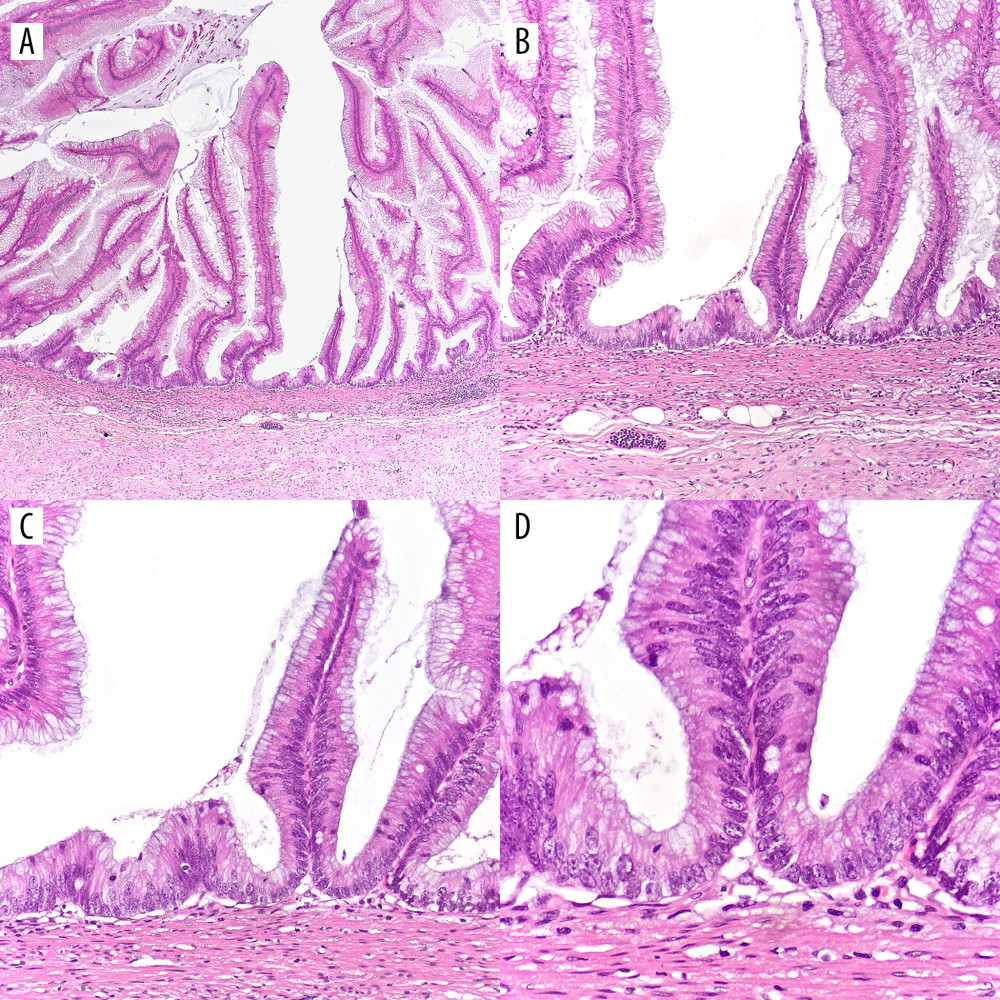
(A–D) Low-grade appendiceal mucinous neoplasm (LAMN). (A–C) Proliferation of mucinous epithelial cells forming villous structures within the appendiceal lumen. The underlying lymphoid tissue is atrophic, and the muscularis mucosae is effaced. Subepithelial fibrosis is present, and the lesion demonstrates a pushing (non-infiltrative) growth pattern. (D) The lesional epithelium shows abundant apical mucin and elongated nuclei with mild (low-grade) cytologic atypia. (H&E; magnifications: A ×40; B ×100; C ×200; D ×400).
Figure 1
https://jours.isi-science.com/imageXml.php?i=amjcaserep-26-e949554-g001.jpg&idArt=949554&w=1000 Figure 1 Hình 1
(A–D) Low-grade appendiceal mucinous neoplasm (LAMN). (A–C) Proliferation of mucinous epithelial cells forming villous structures within the appendiceal lumen. The underlying lymphoid tissue is atrophic, and the muscularis mucosae is effaced. Subepithelial fibrosis is present, and the lesion demonstrates a pushing (non-infiltrative) growth pattern. (D) The lesional epithelium shows abundant apical mucin and elongated nuclei with mild (low-grade) cytologic atypia. (H&E; magnifications: A ×40; B ×100; C ×200; D ×400).
(A–D) U nhầy ruột thừa độ ác tính thấp (LAMN). (A–C) Sự tăng sinh của các tế bào biểu mô nhầy tạo thành các cấu trúc nhung mao bên trong lòng ruột thừa. Mô bạch huyết bên dưới bị teo và lớp cơ niêm bị xóa mờ. Có tình trạng xơ hóa dưới biểu mô và tổn thương thể hiện kiểu phát triển đẩy lồi (không xâm lấn). (D) Biểu mô tổn thương cho thấy lượng chất nhầy dồi dào ở đỉnh và nhân kéo dài với dị dạng tế bào mức độ nhẹ (độ ác tính thấp). (H&E; độ phóng đại: A ×40; B ×100; C ×200; D ×400).
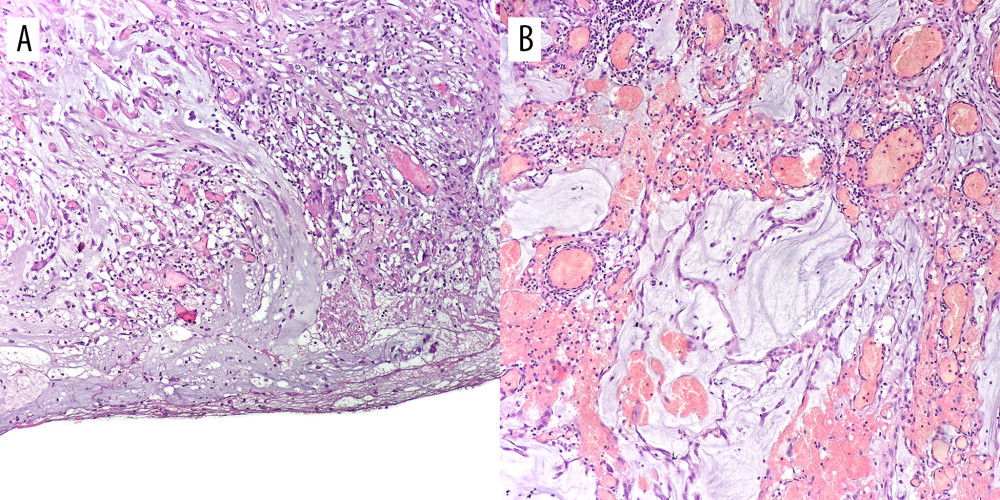
(A, B) Extruded mucin. (A) Mucin pools covering the serosa with a prominent granulation tissue response. (B) Extruded mucin surrounded by granulation tissue composed of fibroblasts, blood vessels and inflammatory cells. (H&E; magnifications: ×100).
Figure 2
https://jours.isi-science.com/imageXml.php?i=amjcaserep-26-e949554-g002.jpg&idArt=949554&w=1000 Figure 2 Hình 2
(A, B) Extruded mucin. (A) Mucin pools covering the serosa with a prominent granulation tissue response. (B) Extruded mucin surrounded by granulation tissue composed of fibroblasts, blood vessels and inflammatory cells. (H&E; magnifications: ×100).
(A, B) Chất nhầy thoát vị. (A) Các bể chất nhầy bao phủ lớp thanh mạc với phản ứng mô hạt nổi bật. (B) Chất nhầy thoát vị được bao quanh bởi mô hạt cấu thành từ các nguyên bào sợi, mạch máu và các tế bào viêm. (H&E; độ phóng đại: ×100).
Show
Hide
EN – VI
VI – EN

Abstract

Tóm tắt

BACKGROUND: Appendiceal mucinous neoplasm (AMN) is a rare tumor, representing 0.2-0.7% of all appendiceal neoplasms. Low-grade AMN (LAMN) occurs more often in women and is often misdiagnosed as appendicitis due to its vague symptoms. It involves mucin accumulation causing appendiceal dilation and carries a risk of pseudomyxoma peritonei (PMP). Prognosis depends on disease extent, with survival rates declining once the tumor spreads beyond the appendix. During pregnancy, diagnosis is challenging because of non-specific symptoms and limited imaging options, highlighting the importance of clinical vigilance and thorough intraoperative evaluation to ensure timely diagnosis and management.

BỐI CẢNH: U nhầy ruột thừa (AMN) là một loại u hiếm gặp, chiếm 0,2-0,7% trong tổng số các khối u ruột thừa. U nhầy ruột thừa độ ác tính thấp (LAMN) xảy ra phổ biến hơn ở phụ nữ và thường bị chẩn đoán nhầm thành viêm ruột thừa do các triệu chứng mơ hồ. Bệnh lý này bao gồm sự tích tụ chất nhầy gây giãn ruột thừa và mang lại nguy cơ mắc giả nhầy phúc mạc (PMP). Tiên lượng phụ thuộc vào mức độ lan rộng của bệnh, với tỷ lệ sống sót giảm dần một khi khối u lan ra ngoài ruột thừa. Trong thời kỳ mang thai, việc chẩn đoán gặp nhiều thách thức do các triệu chứng không đặc hiệu và các lựa chọn chẩn đoán hình ảnh bị hạn chế, điều này nhấn mạnh tầm quan trọng của việc cảnh giác lâm sàng và đánh giá kỹ lưỡng trong phẫu thuật để đảm bảo chẩn đoán và xử trí kịp thời.

CASE REPORT: This report describes the case of a 45-year-old woman with LAMN, incidentally discovered during an elective cesarean section at 40 weeks of gestation, and is the first documented report of this type in Serbia. The patient was asymptomatic, with unremarkable prenatal screenings. Intraoperative inspection revealed approximately 400 ml of thick gelatinous material (PMP) in the abdominal cavity and a tumor-like mass on the appendix. Following the initial appendectomy and biopsy, confirmed LAMN and elevated CA125 led to a secondary operation: extended right hemicolectomy and total omentectomy. This procedure confirmed mucin dissemination, highlighting the urgent need for oncologic intervention despite the tumor’s low grade.

BÁO CÁO CA LÂM SÀNG: Báo cáo này mô tả trường hợp một phụ nữ 45 tuổi mắc LAMN, được phát hiện tình cờ trong một ca mổ lấy thai chủ động ở tuần thứ 40 của thai kỳ, và là báo cáo đầu tiên được ghi nhận về loại hình này ở Serbia. Bệnh nhân không có triệu chứng, các xét nghiệm sàng lọc trước sinh không có gì bất thường. Kiểm tra trong quá trình phẫu thuật phát hiện khoảng 400 ml chất dịch keo đặc (PMP) trong khoang bụng và một khối dạng u ở ruột thừa. Sau khi cắt ruột thừa và sinh thiết ban đầu, kết quả xác nhận LAMN cùng với chỉ số CA125 tăng cao đã dẫn đến cuộc phẫu thuật thứ hai: cắt đại tràng phải mở rộng và cắt toàn bộ mạc nối lớn. Thủ thuật này đã xác nhận sự di căn của chất nhầy, nhấn mạnh nhu cầu cấp thiết phải can thiệp ung bướu mặc dù khối u có độ ác tính thấp.

CONCLUSIONS: Incidental discovery of LAMN during a cesarean section is extremely rare. This case demonstrates the need for intraoperative vigilance, thorough abdominal assessment, and multidisciplinary management to ensure accurate diagnosis and optimal outcomes for both mother and neonate in such complex situations.

KẾT LUẬN: Việc tình cờ phát hiện LAMN trong ca mổ lấy thai là cực kỳ hiếm gặp. Ca lâm sàng này cho thấy sự cần thiết của việc cảnh giác trong phẫu thuật, đánh giá toàn diện ổ bụng và quản lý đa chuyên khoa để đảm bảo chẩn đoán chính xác và mang lại kết quả tối ưu cho cả mẹ và trẻ sơ sinh trong những tình huống phức tạp như vậy.

Keywords: 17-alpha-hydroxyprogesterone, cesarean section, meditation, operating room technicians, pregnancy

Từ khóa: 17-alpha-hydroxyprogesterone, mổ lấy thai, thiền định, kỹ thuật viên phòng mổ, thai kỳ

Introduction

Đặt vấn đề

Appendiceal mucinous neoplasm (AMN) is a rare condition, constituting 0.2% to 0.7% of all appendiceal neoplasms 1–3. Research indicates that LAMN is more common in women, accounting for 88% of cases, with a female-to-male ratio of 4: 1 4,5. Its incidence is low but has increased in various countries worldwide 4,5. Globally, it varies between 0.2% and 2.5% 5–7, with rates of 0.07% to 0.8% in Chile 4, 0.78% in Turkey 8, 0.9% in Spain 9,10, 0.9% to 1.7% in the United States 11, 1.24% in Finland 7, 2.3% in Japan 4, and <3% in Tunisia 12.

U nhầy ruột thừa (AMN) là một tình trạng hiếm gặp, chiếm từ 0,2% đến 0,7% trong tổng số các khối u tân sinh của ruột thừa 1–3. Các nghiên cứu cho thấy LAMN phổ biến hơn ở phụ nữ, chiếm 88% số ca bệnh, với tỷ lệ nữ trên nam là 4:1 4,5. Tỷ lệ mắc bệnh này tuy thấp nhưng đang có xu hướng gia tăng ở nhiều quốc gia trên thế giới 4,5. Trên toàn cầu, tỷ lệ này dao động trong khoảng từ 0,2% đến 2,5% 5–7, với các tỷ lệ cụ thể là 0,07% đến 0,8% ở Chile 4, 0,78% ở Thổ Nhĩ Kỳ 8, 0,9% ở Tây Ban Nha 9,10, 0,9% đến 1,7% ở Hoa Kỳ 11, 1,24% ở Phần Lan 7, 2,3% ở Nhật Bản 4, và <3% ở Tunisia 12.

Mucinous tumors of the bowel, ovaries, and appendix can be benign or have low-grade malignant potential. Histological diagnosis is required to identify the origin and grade of the tumor, and careful surgical excision is necessary to avoid the complication of pseudomyxoma peritonei. Because mucinous tumors are an uncommon cause of acute abdomen, they are frequently initially misdiagnosed as acute appendicitis. In 0.7% to 7% of appendectomies performed for suspected appendicitis, an epithelial tumor of the appendix is unexpectedly discovered upon histological examination 13. The lumen of the appendix is dilated due to the accumulation of mucinous substance 4–7. These tumors cause cystic dilation of the appendix through the accumulation of mucus in the lumen and can spread to the peritoneum, resulting in a specific syndrome known as pseudomyxoma peritonei (PMP), which is often progressive and fatal. Since both histologically benign and malignant AMNs can spread to the peritoneal cavity as PMP, a definitive diagnosis, including pathology and appropriate treatment, is crucial for AMN. Previously published case reports describe only a few similar cases of LAMN diagnosed during pregnancy. These reports highlight the diagnostic challenges and the importance of intraoperative recognition of unusual appendiceal pathology.

Các khối u nhầy của ruột, buồng trứng và ruột thừa có thể là lành tính hoặc có tiềm năng ác tính độ mô học thấp. Cần phải chẩn đoán mô bệnh học để xác định nguồn gốc cũng như độ bộc lộ của khối u, đồng thời việc phẫu thuật cắt bỏ cẩn thận là rất cần thiết nhằm tránh biến chứng giả nhầy phúc mạc. Do u nhầy là một nguyên nhân ít gặp gây hội chứng bụng cấp, chúng thường bị chẩn đoán nhầm ban đầu là viêm ruột thừa cấp. Trong khoảng 0,7% đến 7% các ca phẫu thuật cắt ruột thừa được thực hiện vì nghi ngờ viêm ruột thừa, một khối u biểu mô của ruột thừa được phát hiện một cách bất ngờ khi xét nghiệm mô bệnh học 13. Lòng ruột thừa bị giãn rộng do sự tích tụ của chất nhầy 4–7. Những khối u này gây ra tình trạng giãn nang của ruột thừa thông qua việc tích tụ dịch nhầy trong lòng và có thể lan tràn vào phúc mạc, dẫn đến một hội chứng đặc hiệu gọi là giả nhầy phúc mạc (PMP), vốn thường tiến triển và gây tử vong. Vì cả AMN lành tính và ác tính về mặt mô học đều có thể lan tràn vào khoang phúc mạc dưới dạng PMP, nên việc chẩn đoán xác định, bao gồm giải phẫu bệnh và điều trị thích hợp, là vô cùng quan trọng đối với AMN. Các báo cáo ca lâm sàng đã công bố trước đây chỉ mô tả một số ít trường hợp LAMN tương tự được chẩn đoán trong thai kỳ. Các báo cáo này nhấn mạnh những thách thức trong chẩn đoán và tầm quan trọng của việc nhận biết các bệnh lý ruột thừa bất thường ngay trong quá trình phẫu thuật.

This report describes the case of a 45-year-old woman with a low-grade appendiceal mucinous neoplasm (LAMN) as an incidental finding during cesarean section, representing the first documented case of this type in Serbia.

Báo cáo này mô tả trường hợp một phụ nữ 45 tuổi bị u nhầy ruột thừa độ ác tính thấp (LAMN) được phát hiện tình cờ trong ca mổ lấy thai, đây là trường hợp đầu tiên thuộc loại này được ghi nhận tại Serbia.

Case Report

Báo cáo ca lâm sàng

A 45-year-old woman (gravida 0, para 0) achieved pregnancy through her seventh in vitro fertilization (IVF) cycle following a diagnostic hysteroscopy performed in 2018. She had a comorbidity of hypothyroidism. An early pregnancy ultrasound revealed no abnormalities, with physiological fetal development. During the pregnancy, due to high risk, she received treatment including 250 mg of intramuscular progesterone on day 3, 100 mg of vaginal Utrogestan, 2 mg of Estrofem 3 times daily, 0.2 ml of Clenax subcutaneously once daily, 5 mg of prednisone once daily, 40 mg of Controlok once daily, 100 mg of aspirin once daily, 800 mcg of Folnic once daily, 100 mg of vitamin E, and 100 mg of vitamin C.

Một phụ nữ 45 tuổi (gravida 0, para 0) đã mang thai thành công ở chu kỳ thụ tinh trong ống nghiệm (IVF) thứ bảy sau khi được phẫu thuật nội soi buồng tử cung chẩn đoán vào năm 2018. Cô có bệnh lý đi kèm là suy giáp. Siêu âm giai đoạn đầu thai kỳ không ghi nhận bất thường, thai nhi phát triển sinh lý. Trong suốt thai kỳ, do thuộc nhóm nguy cơ cao, cô đã được điều trị bao gồm progesterone 250 mg tiêm bắp vào ngày thứ 3, Utrogestan 100 mg đặt âm đạo, Estrofem 2 mg x 3 lần/ngày, Clenax 0,2 ml tiêm dưới da 1 lần/ngày, prednisone 5 mg 1 lần/ngày, Controlok 40 mg 1 lần/ngày, aspirin 100 mg 1 lần/ngày, Folnic 800 mcg 1 lần/ngày, vitamin E 100 mg và vitamin C 100 mg.

At 40 weeks of gestation, she underwent an elective cesarean section. A female newborn, weighing 3780 g and measuring 55 cm, was born without complications, with Apgar scores 9 and 10 at 1 and 5 minutes, respectively. During the intraoperative inspection, no abnormalities in the uterus or adnexa were found. However, approximately 400 ml of thick gelatinous material was discovered in the abdominal cavity, consistent with pseudomyxoma peritonei (PMP), and it sent for cytological and histopathological analysis.

Ở tuần thứ 40 của thai kỳ, cô được mổ lấy thai chủ động. Một bé gái sơ sinh nặng 3780 g và dài 55 cm đã chào đời không gặp biến chứng, với điểm Apgar lần lượt là 9 và 10 điểm tại thời điểm 1 phút và 5 phút. Khi kiểm tra trong phẫu thuật, không tìm thấy bất thường nào ở tử cung hoặc phần phụ. Tuy nhiên, các bác sĩ phát hiện khoảng 400 ml chất dịch keo đặc trong khoang bụng, phù hợp với bệnh lý giả nhầy phúc mạc (PMP), dịch này đã được gửi đi phân tích tế bào học và mô bệnh học.

The uterus was appropriately sized for the gestation period. Both adnexa were hypertrophied but free of lesions. The appendix was elongated, with a tumefaction measuring 2–3 cm at its tip, yellowish-white in appearance. After the fetus was delivered, appendectomy and biopsy of the omentum were performed. An abdominal drain was placed in the pouch of Douglas, and all specimens were sent for histopathological analysis.

Tử cung có kích thước phù hợp với tuổi thai. Cả hai phần phụ đều phì đại nhưng không có tổn thương. Ruột thừa kéo dài, có một khối sưng kích thước 2–3 cm ở đầu ruột thừa, bề ngoài có màu trắng vàng. Sau khi thai nhi được đón ra, phẫu thuật cắt ruột thừa và sinh thiết mạc nối lớn đã được thực hiện. Một ống dẫn lưu ổ bụng được đặt ở túi cùng Douglas, và tất cả các bệnh phẩm đều được gửi đi xét nghiệm mô bệnh học.

Preoperative routine laboratory tests along with standard prenatal sonography showed no abnormalities. Importantly, the patient presented no preoperative symptoms suggestive of appendicitis.

Các xét nghiệm phòng thí nghiệm thường quy trước phẫu thuật cùng với siêu âm sản khoa tiêu chuẩn trước sinh không cho thấy bất thường nào. Điều quan trọng là bệnh nhân không có triệu chứng lâm sàng nào trước phẫu thuật gợi ý tình trạng viêm ruột thừa.

Histopathological examination confirmed low-grade appendiceal mucinous neoplasm (LAMN) (Figure 1). The tumor was confined to the appendix, but tumor tissue was found at the resection margin. Cytology revealed reactively changed mesothelial cells, inflammatory cells, and abundant basophilic material. On the sixth postoperative day, a CT scan of the abdomen and pelvis was performed. The findings showed a right iliac abscess (7.5×10 cm), in proximity to the cecum and ascending colon, with fluid-gas content, but no metastases or invasion. The tumor marker cancer antigen 125 (CA125) measured on the 11th postoperative day was elevated (103.9 U/ml). A colorectal surgeon was consulted, and a multidisciplinary team decided to perform a secondary surgery due to the risk of peritoneal dissemination. Exploratory laparotomy revealed a tumor mass in the cecum (3×2 cm) with an abscess. Extended right hemicolectomy with ileocolic anastomosis and total omentectomy were performed. Histopathology confirmed LAMN with rupture and dissemination of acellular mucin across the omentum and the serosa of the intestines, while cellular mucin was detected on the appendix serosa and in the gelatinous peritoneal material (Figure 2). Fifteen lymph nodes were isolated, all showing reactive changes without metastases.

Kết quả xét nghiệm mô bệnh học đã xác nhận u nhầy ruột thừa độ ác tính thấp (LAMN) (Hình 1). Khối u giới hạn ở ruột thừa, nhưng mô u được tìm thấy ở diện cắt. Kết quả tế bào học cho thấy các tế bào biểu mô phúc mạc biến đổi phản ứng, các tế bào viêm và chất kiềm tính phong phú. Vào ngày hậu phẫu thứ sáu, bệnh nhân được chụp CT bụng và chậu. Kết quả cho thấy một khối áp xe hố chậu phải (7,5×10 cm), nằm gần manh tràng và đại tràng lên, có chứa dịch – khí, nhưng không có di căn hay xâm lấn. Chỉ số dấu ấn khối u kháng nguyên ung thư 125 (CA125) đo vào ngày hậu phẫu thứ 11 tăng cao (103,9 U/ml). Bác sĩ phẫu thuật đại trực tràng đã được hội chẩn, và một hội đồng đa chuyên khoa quyết định thực hiện cuộc phẫu thuật thứ hai do nguy cơ di căn phúc mạc. Phẫu thuật mở bụng thăm dò phát hiện một khối u ở manh tràng (3×2 cm) kèm theo áp xe. Phẫu thuật cắt đại tràng phải mở rộng kèm nối hồi – đại tràng và cắt toàn bộ mạc nối lớn đã được tiến hành. Kết quả giải phẫu bệnh xác nhận LAMN có vỡ và phát tán chất nhầy không chứa tế bào (acellular mucin) khắp mạc nối lớn và thanh mạc ruột, trong khi chất nhầy có chứa tế bào (cellular mucin) được phát hiện trên thanh mạc ruột thừa và trong dịch keo phúc mạc (Hình 2). Mười lăm hạch bạch huyết đã được nạo vét, tất cả đều cho thấy các biến đổi phản ứng và không có di căn.

The chronological reporting of surgical findings and postoperative interventions is essential for understanding the diagnostic and therapeutic challenges in this case. This case emphasizes the importance of intraoperative vigilance and timely decision-making in managing incidental pathology findings.

Việc báo cáo theo trình tự thời gian các phát hiện trong phẫu thuật và các can thiệp hậu phẫu là rất cần thiết để hiểu được những thách thức trong chẩn đoán và điều trị ở ca lâm sàng này. Trường hợp này nhấn mạnh tầm quan trọng của việc cảnh giác trong phẫu thuật và đưa ra quyết định kịp thời khi xử trí các phát hiện bệnh lý tình cờ.

Discussion

Bàn luận

LAMN is an uncommon appendiceal pathology 14, with only a few prior reports of LAMN during pregnancy 15. LAMNs are tumors found in the appendix or the adjacent mucosal wall of the cecum 16,17. These tumors characteristically cause cystic dilation of the appendix due to the accumulation of abundant gelatinous material in the lumen. They can spread throughout the peritoneal cavity in the form of gelatinous deposits known as pseudomyxoma peritonei (PMP) 4. While PMP is not locally invasive, the mucin causes local destruction, and the ensuing fibrosis and obstruction can result in complications 18–20. When restricted to the appendix, AMNs are slow-growing lesions with a 96% 5-year disease-free survival rate. However, if AMNs extend beyond the appendix, the disease-free survival rate drops to 66% to 67% 1. Therefore, early detection of AMN and appropriate treatment are crucial for prognosis 18,19,21–23. Studies have found that patients with complete cytoreduction and pathological adenomyxoma had a 5-year survival rate of 86%, while those with incomplete cytoreduction had a 5-year survival rate of 20%. Tumors limited to the mucosa of the appendix can be cured through appendectomy, whereas any growth of neoplastic epithelium beyond the mucosa puts the patient at risk for peritoneal dissemination, adenocarcinoma, or PMP 19. In our case, there was a rupture of the tumor capsule and leakage of mucinous content. PMP was also observed.

LAMN là một bệnh lý ruột thừa ít gặp 14, và chỉ có một vài báo cáo trước đây về LAMN trong thai kỳ 15. LAMN là các khối u được tìm thấy ở ruột thừa hoặc thành niêm mạc lân cận của manh tràng 16,17. Những khối u này có đặc điểm là gây ra tình trạng giãn nang của ruột thừa do sự tích tụ lượng lớn chất dịch keo trong lòng ruột thừa. Chúng có thể lan rộng khắp khoang phúc mạc dưới dạng các tổn thương lắng đọng chất nhầy được gọi là giả nhầy phúc mạc (PMP) 4. Mặc dù PMP không xâm lấn tại chỗ, chất nhầy vẫn gây ra sự phá hủy cục bộ, và tình trạng xơ hóa cũng như tắc nghẽn sau đó có thể dẫn đến các biến chứng 18–20. Khi khu trú ở ruột thừa, AMN là những tổn thương tiến triển chậm với tỷ lệ sống sót không tái phát trong 5 năm là 96%. Tuy nhiên, nếu AMN lan ra ngoài ruột thừa, tỷ lệ sống sót không tái phát trong 5 năm giảm xuống còn 66% đến 67% 1. Do đó, việc phát hiện sớm AMN và điều trị thích hợp là rất quan trọng đối với tiên lượng bệnh 18,19,21–23. Các nghiên cứu đã chỉ ra rằng những bệnh nhân được phẫu thuật giảm thể tích khối u (cytoreduction) hoàn toàn và có u nhầy tuyến (adenomyxoma) giải phẫu bệnh có tỷ lệ sống sót trong 5 năm là 86%, trong khi những người giảm thể tích khối u không hoàn toàn có tỷ lệ sống sót trong 5 năm là 20%. Khối u giới hạn ở niêm mạc ruột thừa có thể được chữa khỏi hoàn toàn bằng phẫu thuật cắt ruột thừa, trong khi bất kỳ sự phát triển nào của biểu mô tân sinh vượt ra ngoài lớp niêm mạc đều khiến bệnh nhân đối mặt với nguy cơ di căn phúc mạc, ung thư biểu mô tuyến (adenocarcinoma) hoặc PMP 19. Trong trường hợp của chúng tôi, đã có sự vỡ bao khối u và rò rỉ thành phần chất nhầy. Tình trạng PMP cũng được ghi nhận.

To the best of our knowledge, no cases of LAMN have been recorded in Serbia; research indicates that only a limited number of cases of LAMN during pregnancy have been reported previously. Inubashiri et al (2020) described an incidental finding of LAMN during cesarean section 15. In addition, several other reports documented similar findings, including mucinous adenoma and mucinous adenocarcinoma of the appendix diagnosed during pregnancy-related procedures 21–23. Four patients underwent laparotomy for acute abdomen during pregnancy, and mucinous adenocarcinoma was diagnosed in all cases. In 2 other asymptomatic patients, a right adnexal mass was incidentally found on obstetric ultrasound during the second trimester, leading to surgery. Of these 2 patients, one was diagnosed with mucinous adenocarcinoma of the appendix, while the other had a mucinous adenoma of the appendix with PMP. Both tumors were discovered incidentally during cesarean section, with mucinous adenocarcinoma confirmed in each case 22,23. Our case was diagnosed during cesarean section, with histological findings confirming the tumor as LAMN with PMP.

Theo hiểu biết tốt nhất của chúng tôi, chưa có trường hợp LAMN nào được ghi nhận tại Serbia; các nghiên cứu chỉ ra rằng chỉ có một số lượng hạn chế các ca LAMN trong thai kỳ được báo cáo trước đây. Inubashiri và cộng sự (2020) đã mô tả một phát hiện tình cờ của LAMN trong ca mổ lấy thai 15. Ngoài ra, một vài báo cáo khác cũng ghi nhận các phát hiện tương tự, bao gồm u tuyến nhầy (mucinous adenoma) và ung thư biểu mô tuyến nhầy của ruột thừa được chẩn đoán trong các thủ thuật liên quan đến thai kỳ 21–23. Bốn bệnh nhân đã trải qua phẫu thuật mở bụng vì hội chứng bụng cấp trong thai kỳ, và ung thư biểu mô tuyến nhầy đã được chẩn đoán trong tất cả các trường hợp. Ở 2 bệnh nhân khác không có triệu chứng, một khối u phần phụ bên phải đã tình cờ được tìm thấy trên siêu âm sản khoa trong tam cá nguyệt thứ hai, dẫn đến phẫu thuật. Trong số 2 bệnh nhân này, một người được chẩn đoán mắc ung thư biểu mô tuyến nhầy ruột thừa, trong khi người kia bị u tuyến nhầy ruột thừa kèm PMP. Cả hai khối u đều được phát hiện tình cờ trong ca mổ lấy thai, với ung thư biểu mô tuyến nhầy được xác nhận trong mỗi trường hợp 22,23. Trường hợp của chúng tôi được chẩn đoán trong ca mổ lấy thai, với các phát hiện mô bệnh học xác nhận khối u là LAMN kèm theo PMP.

Clinical manifestations of LAMN without PMP may include right lower-quadrant abdominal pain, a palpable mass, nausea, vomiting, gastrointestinal bleeding, and signs of intestinal intussusception 18,20. The differential diagnosis for lower right abdominal pain includes a variety of conditions, such as appendicitis, appendiceal abscess, hydrosalpinx, ovarian tumors, endometriotic cysts, and enterocolitis in women. It is important to note that obstetric symptoms (__eg__, uterine contractions) can mask the clinical signs of appendiceal lesions in pregnant women 24. Studies on AMN in pregnant women suggest that clinical manifestations, such as acute abdomen, may be indicative of cancer. Taken together, these findings highlight the significant challenges in the preoperative diagnosis of AMN during pregnancy. This is further supported by the findings of Villa et al, who reported the co-occurrence of LAMN with neuroendocrine tumors, underscoring the histopathological complexity and diagnostic difficulties of such neoplasms during surgical interventions 25.

Biểu hiện lâm sàng của LAMN không kèm PMP có thể bao gồm đau bụng hố chậu phải, sờ thấy khối đặc, buồn nôn, nôn, xuất huyết tiêu hóa và các dấu hiệu của lồng ruột 18,20. Chẩn đoán phân biệt cho tình trạng đau bụng dưới bên phải bao gồm nhiều bệnh lý khác nhau như viêm ruột thừa, áp xe ruột thừa, ứ nước vòi trứng, u buồng trứng, nang lạc nội mạc tử cung và viêm ruột non đại tràng ở phụ nữ. Điều quan trọng cần lưu ý là các triệu chứng sản khoa (ví dụ: cơn co tử cung) có thể che lấp các dấu hiệu lâm sàng của tổn thương ruột thừa ở phụ nữ mang thai 24. Các nghiên cứu về AMN ở phụ nữ mang thai gợi ý rằng các biểu hiện lâm sàng, chẳng hạn như bụng cấp, có thể là dấu hiệu của ung thư. Nhìn chung, những phát hiện này làm nổi bật những thách thức đáng kể trong việc chẩn đoán trước phẫu thuật đối với AMN trong thai kỳ. Điều này càng được củng cố bởi các phát hiện của Villa và cộng sự, những người đã báo cáo sự đồng xuất hiện của LAMN với các khối u thần kinh nội tiết, nhấn mạnh tính phức tạp về mặt mô bệnh học và những khó khăn trong chẩn đoán các khối u tân sinh như vậy trong quá trình can thiệp phẫu thuật 25.

Diagnosing and staging AMN can be challenging during pregnancy due to the limited availability of safe diagnostic methods and the non-specific clinical presentation. Pregnancy introduces unique diagnostic and therapeutic challenges when dealing with LAMN. The non-specific clinical presentation, physiological changes in the abdomen, and the limited use of radiological imaging due to fetal safety concerns can delay diagnosis or result in incidental findings during obstetric procedures. In this case, the absence of preoperative symptoms and the inability to perform preoperative abdominal CT or MRI highlights the importance of vigilance during obstetric surgery. The choice of surgical approach must balance maternal and fetal safety with oncologic principles, which requires interdisciplinary collaboration. Low-grade mucinous neoplasia is a rare condition, and its occurrence during pregnancy is even more uncommon 21,26.

Việc chẩn đoán và phân chia giai đoạn AMN có thể gặp nhiều khó khăn trong thai kỳ do tính sẵn có hạn chế của các phương pháp chẩn đoán an toàn và biểu hiện lâm sàng không đặc hiệu. Thai kỳ mang lại những thách thức độc đáo về cả chẩn đoán và điều trị khi xử trí LAMN. Biểu hiện lâm sàng không đặc hiệu, các thay đổi sinh lý trong ổ bụng và việc hạn chế sử dụng chẩn đoán hình ảnh phóng xạ vì lo ngại an toàn cho thai nhi có thể làm trì hoãn chẩn đoán hoặc dẫn đến các phát hiện tình cờ trong các thủ thuật sản khoa. Trong trường hợp này, việc không có các triệu chứng trước phẫu thuật và không thể thực hiện chụp CT hoặc MRI bụng trước phẫu thuật đã nhấn mạnh tầm quan trọng của việc cảnh giác trong phẫu thuật sản khoa. Lựa chọn phương pháp tiếp cận phẫu thuật phải cân bằng giữa sự an toàn của mẹ và thai nhi với các nguyên tắc ung bướu, điều này đòi hỏi sự phối hợp đa chuyên khoa. Khối u nhầy độ ác tính thấp là một tình trạng hiếm gặp, và sự xuất hiện của nó trong thai kỳ lại càng ít gặp hơn 21,26.

LAMN is more common and has a higher likelihood of malignant association in women, making it an entity that ultrasound practitioners in gynecology should be familiar with. Computed tomography (CT) and magnetic resonance imaging (MRI) are useful in the preoperative diagnosis of AMN. Pregnancy increases the complexity of diagnosis and treatment. CT and MRI pose potential risks to the fetus, limiting their use. MRI of the abdomen and pelvis without contrast is a safe and informative alternative to CT during pregnancy for clarifying the diagnosis of peritoneal lesions 27. CT of the abdomen can identify LAMN if the lumen of the appendix is greater than 1.3 cm and if cystic dilation and mural calcification are present. CT can also help differentiate between benign and malignant causes 28. Ultrasound is considered a safe examination for pregnant women, but pregnancy can complicate both transabdominal and transvaginal ultrasound examinations in detecting appendiceal lesions, depending on gestational age 29. Ileocecal region diseases (__eg__, ovarian cysts) are much more common in women than AMN; therefore, in many cases, AMN is diagnosed postoperatively rather than preoperatively. If the diagnosis is not made incidentally during routine ultrasound, it may be established during acute cases of peritonitis and appendicitis in pregnancy or intraoperatively during gynecological procedures for the removal of a suspicious adnexal mass 30. In the largest series of surgical cases of LAMN (135 cases over 24 years), only 19% of patients had an accurate preoperative diagnosis, and only 2 were identified via ultrasound 31.

LAMN phổ biến hơn và có khả năng liên quan đến ác tính cao hơn ở phụ nữ, khiến nó trở thành một bệnh lý mà các bác sĩ siêu âm phụ khoa nên quen thuộc. Chụp cắt vi tính (CT) và chụp cộng hưởng từ (MRI) rất hữu ích trong việc chẩn đoán trước phẫu thuật đối với AMN. Thai kỳ làm tăng tính phức tạp của chẩn đoán và điều trị. CT và MRI tiềm ẩn nhiều nguy cơ cho thai nhi, làm hạn chế việc sử dụng chúng. Chụp MRI bụng và chậu không tiêm thuốc cản quang là một giải pháp thay thế an toàn và cung cấp nhiều thông tin hơn so với CT trong thai kỳ để làm rõ chẩn đoán các tổn thương phúc mạc 27. Chụp CT bụng có thể xác định LAMN nếu đường kính lòng ruột thừa lớn hơn 1,3 cm và nếu có tình trạng giãn nang cũng như vôi hóa thành ruột thừa. CT cũng có thể giúp phân biệt giữa nguyên nhân lành tính và ác tính 28. Siêu âm được coi là một phương pháp kiểm tra an toàn cho phụ nữ mang thai, nhưng thai kỳ có thể làm phức tạp cả quá trình siêu âm qua thành bụng và qua đường âm đạo trong việc phát hiện các tổn thương ruột thừa, tùy thuộc vào tuổi thai 29. Các bệnh lý vùng hồi manh tràng (ví dụ: nang buồng trứng) phổ biến hơn nhiều ở phụ nữ so với AMN; do đó, trong nhiều trường hợp, AMN được chẩn đoán sau phẫu thuật thay vì trước phẫu thuật. Nếu chẩn đoán không được thực hiện tình cờ qua siêu âm thường quy, nó có thể được xác định trong các trường hợp viêm phúc mạc và viêm ruột thừa cấp tính trong thai kỳ hoặc trong khi phẫu thuật phụ khoa để cắt bỏ một khối u phần phụ đáng ngờ 30. Trong loạt ca phẫu thuật LAMN lớn nhất (135 ca trong 24 năm), chỉ có 19% bệnh nhân có chẩn đoán chính xác trước phẫu thuật, và chỉ có 2 ca được xác định qua siêu âm 31.

Another potential method for detecting AMN is through tumor markers. Specifically, markers like carcinoembryonic antigen (CEA), carbohydrate antigen 19-9 (CA 19-9), and cancer antigen 125 (CA125) are known to be elevated in AMN and may show slight fluctuations even during pregnancy 32. A newly recognized sensitive marker for colorectal adenocarcinomas is SATB2 (Special AT-rich sequence-binding protein 2) 31. Therefore, these markers could be valuable in making preoperative diagnoses as well as in monitoring progression and recurrence 33,34. In our case, CA125 measured on the eleventh postoperative day showed elevated levels.

Một phương pháp tiềm năng khác để phát hiện AMN là thông qua các dấu ấn khối u. Cụ thể, các dấu ấn như kháng nguyên phôi carcino (CEA), kháng nguyên carbohydrate 19-9 (CA 19-9), và kháng nguyên ung thư 125 (CA125) được biết là tăng cao trong AMN và có thể có những dao động nhỏ ngay cả trong thai kỳ 32. Một dấu ấn nhạy bén mới được công nhận cho ung thư biểu mô tuyến đại trực tràng là SATB2 (Special AT-rich sequence-binding protein 2) 31. Do đó, các dấu ấn này có thể có giá trị trong việc đưa ra chẩn đoán trước phẫu thuật cũng như trong việc theo dõi tiến triển và tái phát bệnh 33,34. Trong trường hợp của chúng tôi, chỉ số CA125 đo vào ngày hậu phẫu thứ mười một cho thấy mức độ tăng cao.

A recent study indicated that LAMN can be classified into 2 groups: one confined to the lumen of the appendix, and the other involving mucin and/or neoplastic epithelium in the submucosa, wall, and/or peri-appendicular tissue of the appendix, with or without perforation. The authors concluded that the latter subtype carries a higher risk of progression and should be managed with cytoreductive surgery and chemotherapy 3. A population study in the Netherlands on benign AMN found an association with PMP in 2% of cases 3. Taken together, these findings suggest that even benign LAMN may require careful monitoring. For AMN, aggressive treatment, including optimal debulking surgery and/or chemotherapy, is essential 4–8.

Một nghiên cứu gần đây chỉ ra rằng LAMN có thể được phân thành 2 nhóm: một nhóm giới hạn trong lòng ruột thừa, và nhóm còn lại có sự tham gia của chất nhầy và/hoặc biểu mô tân sinh ở lớp dưới niêm mạc, thành, và/hoặc mô quanh ruột thừa, có hoặc không có thủng. Các tác giả kết luận rằng phân nhóm sau mang lại nguy cơ tiến triển cao hơn và nên được quản lý bằng phẫu thuật giảm thể tích khối u và hóa trị 3. Một nghiên cứu trên tổng thể dân số ở Hà Lan về AMN lành tính đã tìm thấy mối liên quan với PMP trong 2% số ca bệnh 3. Nhìn chung, những phát hiện này gợi ý rằng ngay cả LAMN lành tính cũng có thể cần được theo dõi cẩn thận. Đối với AMN, việc điều trị tích cực, bao gồm phẫu thuật loại bỏ tối đa khối u tối ưu và/hoặc hóa trị, là điều thiết yếu 4–8.

To our knowledge, there are no reports of preoperatively diagnosed AMN during pregnancy 22,23. Further studies dedicated to understanding mucinous neoplasms may assist in designing a more targeted therapeutic plan for such patients. For pregnant women with slow or moderate disease progression, pregnancy (or the desire for pregnancy) should be allowed to continue until vaginal delivery. In patients with rapid progression, termination of pregnancy and definitive treatment may be necessary to protect the mother 22. In our case, LAMN did not compromise the pregnancy, which proceeded without complications, and the woman delivered a term, healthy newborn via cesarean section.

Theo hiểu biết của chúng tôi, chưa có báo cáo nào về việc chẩn đoán trước phẫu thuật đối với AMN trong thai kỳ 22,23. Các nghiên cứu sâu hơn dành cho việc tìm hiểu các khối u tân sinh dạng nhầy có thể hỗ trợ thiết lập một kế hoạch điều trị trúng đích hơn cho những bệnh nhân này. Đối với phụ nữ mang thai có tiến triển bệnh chậm hoặc trung bình, thai kỳ (hoặc mong muốn mang thai) nên được phép tiếp tục cho đến khi sinh ngả âm đạo. Ở những bệnh nhân tiến triển nhanh, việc chấm dứt thai kỳ và điều trị triệt để có thể là cần thiết để bảo vệ người mẹ 22. Trong trường hợp của chúng tôi, LAMN không làm ảnh hưởng đến thai kỳ, thai kỳ đã diễn ra mà không có biến chứng, và người phụ nữ đã sinh một trẻ sơ sinh đủ tháng, khỏe mạnh thông qua phẫu thuật mổ lấy thai.

Surgical resection of the appendix is often sufficient. Right hemicolectomy is frequently performed for mucinous cystadenocarcinoma, while appendectomy is sufficient for benign pathologies such as hyperplasia and cystadenoma.

Phẫu thuật cắt bỏ ruột thừa thường là đủ. Phẫu thuật cắt đại tràng phải thường được thực hiện đối với ung thư biểu mô tuyến nang nhầy (mucinous cystadenocarcinoma), trong khi phẫu thuật cắt ruột thừa là đủ đối với các bệnh lý lành tính như tăng sản và u tuyến nang (cystadenoma).

Conclusions

Kết luận

The described case of a low-grade appendiceal mucinous neoplasm (LAMN), discovered incidentally during cesarean section, represents an exceptionally rare occurrence, particularly in pregnancy. Although the patient was asymptomatic and the lesion was detected unexpectedly, timely diagnosis and surgical intervention were crucial for a favorable outcome. This case emphasizes the importance of careful intraoperative assessment of abdominal and pelvic organs during obstetric procedures, as well as the need for multidisciplinary management to ensure optimal maternal and neonatal outcomes. Furthermore, it highlights the diagnostic challenges of mucinous neoplasms in pregnancy, where non-specific symptoms and limited imaging options can delay recognition.

Trường hợp u nhầy ruột thừa độ ác tính thấp (LAMN) được mô tả ở trên, được phát hiện tình cờ trong ca mổ lấy thai, đại diện cho một sự cố đặc biệt hiếm gặp, đặc biệt là trong thai kỳ. Mặc dù bệnh nhân không có triệu chứng và tổn thương được phát hiện một cách bất ngờ, việc chẩn đoán và can thiệp phẫu thuật kịp thời là yếu tố quyết định để mang lại kết quả thuận lợi. Ca lâm sàng này nhấn mạnh tầm quan trọng của việc đánh giá cẩn thận các cơ quan trong ổ bụng và vùng chậu trong quá trình thực hiện các thủ thuật sản khoa, cũng như sự cần thiết của việc quản lý đa chuyên khoa để đảm bảo kết quả tối ưu cho cả mẹ và trẻ sơ sinh. Hơn nữa, nó cũng làm nổi bật những thách thức trong chẩn đoán u nhầy trong thai kỳ, nơi các triệu chứng không đặc hiệu và các lựa chọn chẩn đoán hình ảnh hạn chế có thể làm trì hoãn việc nhận biết bệnh.

Future studies and multicenter reports are warranted to better define diagnostic pathways, therapeutic strategies, and long-term maternal and neonatal outcomes in cases of incidentally discovered LAMN during pregnancy.

Các nghiên cứu trong tương lai và các báo cáo đa trung tâm là cần thiết để xác định rõ hơn các con đường chẩn đoán, chiến lược điều trị, cũng như kết quả lâu dài cho mẹ và trẻ sơ sinh trong các trường hợp tình cờ phát hiện LAMN trong thai kỳ.

Reference

  1. Saleem N, Shahid F, Ali SM, Incidental low grade mucinous neoplasm of appendix in pregnancy: A case report & literature review: Ann Med Surg (Lond), 2020; 59; 195-98
  2. Núñez-Rocha RE, Girón F, Rodríguez L, Incidence of appendiceal neoplasms in appendectomy patients: BMC Surg, 2023; 23(1); 287
  3. Xiao J, Li P, Liu W, Analysis of clinical characteristics of low-grade appendiceal mucinous neoplasm (LAMN): A retrospective cohort study of 51 LAMN patients: J Investig Surg, 2020; 34(7); 721-27
  4. Tajima T, Tajiri T, Mukai M, Single-center analysis of appendiceal neoplasms: Oncol Lett, 2018; 15(5); 6393-99
  5. Turaga KK, Pappas SG, Gamblin TC, Importance of histologic subtype in the staging of appendiceal tumors: Ann Surg Oncol, 2012; 19(5); 1379-85
  6. Beltrán MA, Tapia R, Madariaga JMalignant tumors of the cecal appendix in patients undergoing surgery for appendicitis in Region IV of Chile: Rev Chil Cir, 2013; 65(6); 509-14 [in Spanish]
  7. Lietzén E, Grönroos JM, Mecklin JP, Appendiceal neoplasm risk associated with complicated acute appendicitis: A population-based study: Int J Colorectal Dis, 2019; 34(1); 39-46
  8. Zhang Y, Zulfiqar M, Bluth MH, Molecular diagnostics in the neoplasms of small intestine and appendix: 2018 update: Clin Lab Med, 2018; 38(2); 343-55
  9. Kunduz E, Bektasoglu HK, Unver N, Analysis of appendiceal neoplasms on 3544 appendectomy specimens for acute appendicitis: Retrospective cohort study of a single institution: Med Sci Monit, 2018; 24; 4421-26
  10. Nutu OA, Marcacuzco Quinto AA, Manrique Municio AMucinous tumors of the appendix: Incidence, diagnosis and surgical treatment: Cir Esp, 2017; 95(6); 321-27 [in Spanish]
  11. Loftus TJ, Raymond SL, Sarosi GA, Predicting appendiceal tumors among patients with appendicitis: J Trauma Acute Care Surg, 2017; 82(4); 771-75
  12. Limaiem F, Arfa N, Marsaoui L, Unexpected histopathological findings in appendectomy specimens: A retrospective study of 1627 cases: Indian J Surg, 2015; 77(Suppl 3); 1285-90
  13. Murphy EM, Farquharson SM, Moran BJ, Management of an unexpected appendiceal neoplasm: Br J Surg, 2006; 93; 783-92
  14. Ramaswamy V, Pathology of mucinous appendiceal tumors and pseudomyxoma peritonei: Indian J Surg Oncol, 2016; 7; 258-67
  15. Inubashiri E, Watanabe Y, Akutagawa N, An incidental finding of low grade appendiceal mucinous neoplasm during cesarean section: A case report: JGH Open, 2020; 4; 306-8
  16. Köhler F, Matthes N, Rosenfeldt M, Neoplasms of the appendix: Dtsch Arztebl Int, 2023; 120(31–32); 519-25
  17. Panarelli NC, Yantiss RK, Mucinous neoplasms of the appendix and peritoneum: Arch Pathol Lab Med, 2011; 135; 1261-68
  18. Smeenk RM, van Velthuysen MLF, Verwaal VJ, Zoetmulder FAN, Appendiceal neoplasms and pseudomyxoma peritonei: A population-based study: Eur J Surg Oncol, 2008; 34; 196-201
  19. Andreopoulou E, Yee H, Warycha M, Mucinous cancer of the appendix: Challenges in diagnosis and treatment: J Chemother, 2007; 19; 451-54
  20. Abdu B, Hobgood D, Stallings S, Depasquale S, Incidental finding of pseudomyxoma peritonei at primary cesarean section: Am J Perinatol, 2009; 26; 633-35
  21. Erika H, Dal Y, Paul S, Management of appendiceal pseudomyxoma peritonei diagnosed during pregnancy: World J Surg Oncol, 2009; 7; 48
  22. Kalu E, Croucher C, Appendiceal mucocele: A rare differential diagnosis of a cystic right adnexal mass: Arch Gynecol Obstet, 2005; 271; 86-88
  23. Andersen B, Nielsen T, Appendicitis in pregnancy: Diagnosis, management and complications: Acta Obstet Gynecol Scand, 1999; 78; 758-62
  24. Low RN, Barone RM, Imaging for peritoneal metastases: Surg Oncol Clin N Am, 2018; 27(3); 425-42
  25. Villa M, Sforza D, Siragusa L, A low-grade appendiceal mucinous neoplasia and neuroendocrine appendiceal collision tumor: A case report and review of the literature: Am J Case Rep, 2021; 22; e927876
  26. Ray JG, Vermeulen MJ, Bharatha A, Association between MRI exposure during pregnancy and fetal and childhood outcomes: JAMA, 2016; 316(9); 952-61
  27. Ahmed N, Vimplis S, Deo N, A mucocele of the appendix seen as an adnexal mass on ultrasound scan: J Obstet Gynaecol, 2016; 37(1); 116-17
  28. Smolkin C, Kiridly A, Pryor A, Appendicitis during pregnancy: best surgical practices and clinical management: Open Access Surg, 2023; 16; 95-103
  29. Borges AL, Reis-de-Carvalho C, Chorão M, Low-grade mucinous appendiceal neoplasm mimicking an ovarian lesion: A case report and review of literature: World J Clin Cases, 2021; 9(10); 2334-43
  30. Fourie H, Al Memar M, Tuomey M, The ‘onion skin’ sign of a low-grade appendiceal mucinous neoplasm: An incidental finding during early pregnancy assessment: Australas J Ultrasound Med, 2024; 27(2); 131-35
  31. Pickhardt PJ, Levy AD, Rohrmann CA, Kende AI, Primary neoplasms of the appendix: Radiologic spectrum of disease with pathologic correlation: Radiographics, 2003; 23(3); 645-62
  32. Van Hooser A, Williams TR, Myers DT, Mucinous appendiceal neoplasms: Pathologic classification, clinical implications, imaging spectrum and mimics: Abdom Radiol, 2018; 43; 2913-22
  33. Yousef A, Yousef M, Zeineddine MA, Serum tumor markers and outcomes in patients with appendiceal adenocarcinoma: JAMA Netw Open, 2024; 7(2); e240260
  34. Schmoeckel E, Kirchner T, Mayr D, SATB2 is a supportive marker for the differentiation of a primary mucinous tumor of the ovary and an ovarian metastasis of a low-grade appendiceal mucinous neoplasm (LAMN): A series of seven cases: Pathol Res Pract, 2018; 214(3); 426-30

Có thể bạn quan tâm